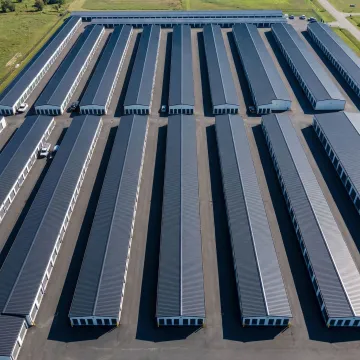
What is cost segregation for self-storage?
Cost segregation for self-storage is an engineering-based tax strategy that identifies and reclassifies components of your warehouse such as paving, fencing, electrical systems, lighting, and drainage from a 39-year depreciation schedule into shorter 5, 7, or 15-year schedules. This accelerates your depreciation deductions, significantly reducing taxable income and increasing cash flow in the early years of ownership.
What is the bonus depreciation on self-storage?
Bonus depreciation allows self storage owners to immediately deduct a large percentage of the cost of assets identified in a cost segregation study. Components reclassified as 5-year or 15-year property may qualify for bonus depreciation, enabling owners to take an outsized deduction in the first year rather than spreading it over decades. This can result in substantial first-year tax savings, often exceeding the cost of the study by 10 to 25 times.
Which components of a self storage warehouse qualify for reclassification?
Common reclassifiable components include site improvements like parking lots, driveways, and landscaping; specialized electrical systems; security systems and lighting; fencing; drainage infrastructure; roll-up doors; and certain interior finishes. A Seneca engineer will identify every eligible component specific to your property to maximize your reclassifiable asset value.
How much can a self storage owner expect to save?
Savings vary based on your property's value and composition, but Seneca clients achieve an average first-year deduction of $171,243. For self storage warehouses valued between $1M and $3M, typical first-year savings range from $75,000 to $200,000. ROI on study fees typically falls between 10:1 and 25:1. A free preliminary analysis will give you a property-specific estimate before any commitment.
Can I claim cost segregation on a self storage property I purchased years ago?
Yes. Seneca's lookback cost segregation study allows you to claim all missed depreciation from the past 15 years in a single tax year using IRS Form 3115 without filing amended returns. This is one of the most powerful catch-up opportunities for self storage owners who have been depreciating their property on the standard 39-year schedule.
How long does a cost segregation study take for a self storage facility?
Seneca completes most studies within 2–4 weeks, significantly faster than the industry standard of 4–8 weeks. If you opt for a virtual inspection, turnaround is typically 2–3 weeks. Rush service is available for time-sensitive tax deadlines, delivering results in as little as one week. A dedicated account manager keeps you informed throughout the entire process.
Does Seneca Cost Segregation provide IRS audit defense?
Yes. Every study includes Seneca's AuditDefense guarantee at no additional charge. If your cost segregation study is audited by the IRS, Seneca's specialists handle all communications, provide supporting documentation, and defend the study for as long as you own the property. If a material issue is found in the study, Seneca can even refund the study cost.
What does a cost segregation study for a self storage warehouse cost?
Study fees are based on your property's size and complexity. For properties valued between $300K and $1M, fees typically range from $3,000 to $12,000, with first-year savings of $30,000–$75,000. For $1M–$3M properties, fees range from $10,000–$20,000. A free consultation and savings estimate are provided upfront so you can confirm the ROI before committing.
What did a Seneca study find on a real self-storage facility?
Seneca studied a self-storage facility built in 1980 on a 1.29-acre lot, with more than 100 units, a rentable warehouse and rentable parking. The study identified $276,187 of 5- and 15-year property, with about 18% of the basis moved to 5-year assets and 13% to 15-year property. Using the 80% bonus depreciation rate in effect at the time, the owner saved more than $85,000 in federal tax in the first year. A facility acquired after January 19, 2025 qualifies for 100% bonus, so the same study would front-load even more of the deduction.