


Most property owners think everything in their building depreciates the same way. That’s a costly mistake.
If you’re a real estate investor looking to cut your tax bill, understanding how cost segregation studies identify different types of assets changes everything.
The right study can reclassify a big chunk of your property into faster depreciation schedules, putting real money back in your pocket.
What is Tangible Personal Property?
Tangible personal property is physical, movable property that isn’t permanently attached to your building. Think of it as the stuff you could theoretically remove without tearing down walls or damaging the structure itself.
The IRS classifies this as Section 1245 property. It depreciates over five or seven years instead of the 27.5 or 39 years required for buildings. That’s where the real tax savings happen.
Five-year property includes things like:
- Carpeting: In apartments and rental properties
- Appliances: Refrigerators, dishwashers, ranges, microwaves
- Office Equipment: Computers and peripherals
- Specialized Fixtures: Equipment tied to your specific business
These items depreciate at 20% in year one.
Seven-year property covers:
- Office Furniture: Desks, filing cabinets, conference tables
- General Business Equipment: Anything not specifically classified elsewhere
First-year depreciation hits about 14.29%.
Here’s the key question that separates personal property from building components: Does it serve the building itself or your business operations?
A regular HVAC system that heats the whole building lasts 39 years. But a dedicated cooling unit for your server room? That’s a five-year property because it serves specific equipment, not the building.
You’ll also find personal property in decorative lighting and wall finishes, window treatments, kitchen cabinetry, security cameras, modular partitions, and safety equipment like fire extinguishers.
When you sell, Section 1245 property is subject to depreciation recapture at ordinary income rates. You got the benefit up front, so the IRS wants it back on the exit.

What are Land Improvements?
Land improvements sit in the middle ground. They’re not the land itself (which never depreciates), and they’re not part of your building. They’re improvements made directly to the land.
These qualify for 15-year depreciation (under Asset Class 00.3, based on Revenue Procedure 87-56), which is still way better than the 39 years you’d otherwise face.
They use the 150% declining balance method, which means first-year depreciation runs about 5% under the half-year convention.
Common land improvements include:
- Paving: Parking lots, driveways, turning areas
- Walkways: Sidewalks and pathways
- Site Work: Drainage systems, utilities
- Barriers: Fencing and retaining walls
- Landscaping: Trees, shrubs, irrigation systems
- Lighting: Outdoor light poles and fixtures
The distinction is simple. Does it attach to the ground or to your building’s foundation? A parking lot poured over dirt is a land improvement. A parking garage attached to your building follows building depreciation rules.
Land improvements typically make up 10-15% of your total property costs. Even at 15 years, that’s massive compared to depreciating the same costs over 39 years.
One important note: initial site work, like clearing and grading, doesn’t count. That cost goes into your land basis and never depreciates. But improvements made after that get their own depreciation schedule because they’ll eventually wear out and need replacement.
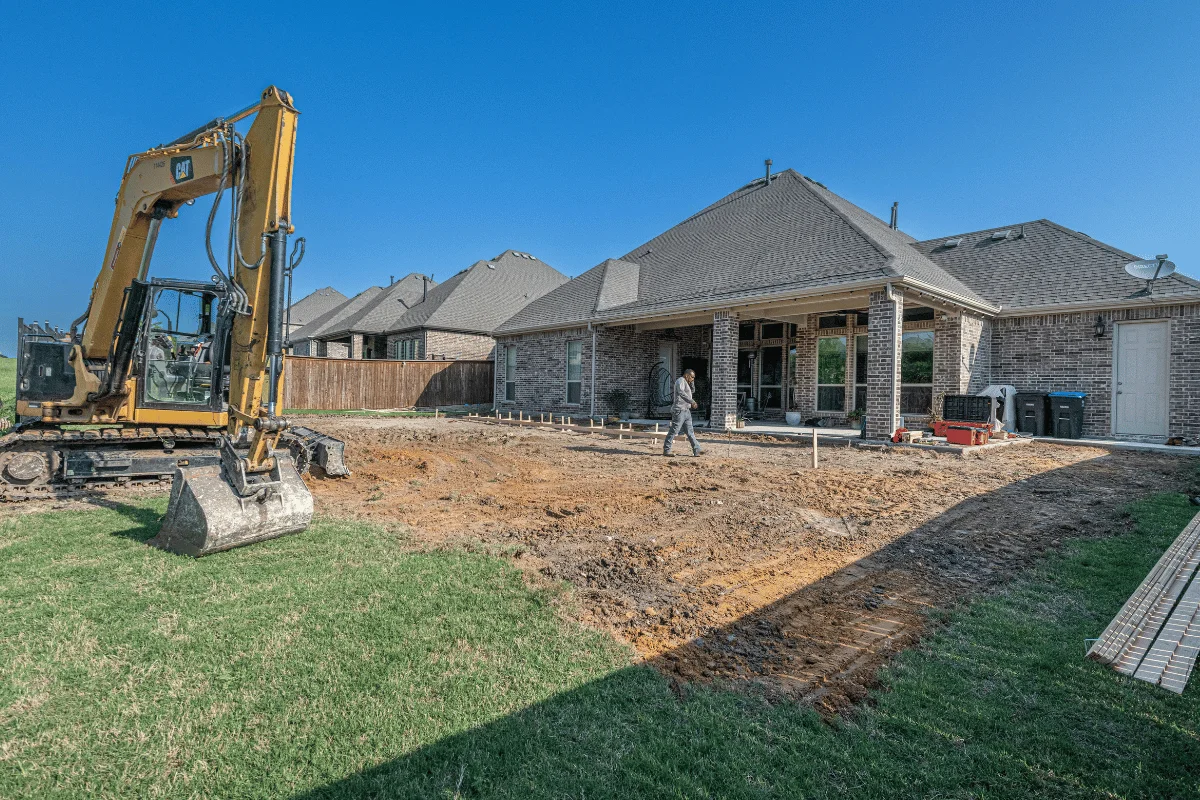
How to Classify Tangible Personal Property and Land Improvements in a Study
Engineers follow a specific methodology backed by decades of IRS guidance and court cases.
It starts with your documentation.
Engineers dig into construction blueprints, contractor invoices, payment applications, change orders, and every relevant record they can find.
For properties you bought, they use professional cost guides like RSMeans to estimate what each component costs.
But what separates good studies from junk: the site visit. Quality studies require an engineer to virtually or physically walk your property.
They photograph assets, identify systems not shown in drawings, document what’s underground, and talk to your property manager about how everything actually works.
The legal test comes from a 1975 court case. Engineers evaluate six factors for each component:
- Can it be moved, and has it been moved before?
- Was it designed to stay permanently?
- How long was it expected to remain?
- How hard would removal be?
- Would removing it cause damage?
- How is it attached to the property?
There’s no simple yes-or-no test. Every decision depends on the specific facts of your property. That’s why you need actual engineers, not software or contractors playing tax expert.
Some systems get complicated.
Take electrical distribution. The main power serving your building stays at 39 years. But if 15% of your electrical capacity serves dedicated equipment, that portion might qualify for faster depreciation.
Engineers run load studies to figure out these percentages.
Every classification needs documentation: blueprints with personal property highlighted, engineering calculations, legal citations, and reconciliation back to your total costs.
The IRS wants standard terminology consistent with construction documents. Using creative descriptions to disguise what something really is will get flagged in an audit.
u/RE-Cost-Seg emphasizes this point when discussing cost segregation studies:
“Keep detailed records and documentation throughout your purchase and renovation process. It’s critical for substantiation in case of an IRS inquiry.”
Without proper documentation backing up every classification decision, even legitimate deductions can get challenged during an audit.
Detailed Examples: Identifying Assets by Property Type
Different property types have different opportunities.
Here’s what engineers typically find in real properties:
Multi-Family Apartment Buildings (15-25% Reclassified)
These properties contain substantial personal property that qualifies for accelerated depreciation.
Common assets include:
- Appliances: Refrigerators, dishwashers, ranges, microwaves, disposals
- Flooring: Carpet, vinyl plank, and removable floor coverings in units
- Cabinetry: Kitchen cabinets and bathroom vanities
- Unit Features: Window treatments, closet organizers
- Common Areas: Fitness equipment, pool furniture, leasing office furnishings
- Site Improvements: Parking lots, landscaping, irrigation systems, fencing
The Waverly Townhomes project in Albany, Oregon, proves the potential.
This 35-unit townhouse community with a $5.9 million cost basis reclassified nearly 24% of costs into accelerated depreciation (19.77% as five-year property, 3.99% as 15-year land improvements).
The result is a first-year tax deduction of $1.25 million, generating $423,006 in tax savings.
Single-Family Rentals (10-35% Reclassified)
Long-term and short-term rental homes offer significant opportunities, especially after renovations.
Key assets include:
- Kitchen and Bath Improvements: Cabinets, countertops, fixtures
- Flooring: Throughout the main living areas
- Appliances: Full kitchen appliance packages
- Site Features: Pools, decks, outdoor structures, landscaping
- Specialty Areas: Game rooms, upgraded HVAC systems
A single-family home in Las Vegas purchased for $370,000 with $50,000 in improvements shows what’s possible.
The study identified 33% of costs qualifying for accelerated depreciation (10.15% as five-year property, 22.99% as 15-year land improvements).
The owner received a $119,377 first-year deduction, saving $41,832 in taxes.
Self-Storage Facilities (20-35% Reclassified):
Storage properties benefit from substantial site improvements and specialized systems:
- Unit Components: Individual unit doors, lighting, and electrical systems
- Security Systems: Cameras, gate systems, access controls
- Site Work: Extensive paving, drainage, fencing
- Office Areas: Reception furniture, fixtures
- Specialty Features: Climate control systems, warehouse lighting
A self-storage facility on 1.29 acres with over 100 units demonstrates the impact.
Built in 1980 and purchased for $872,550, the property reclassified 31.66% of costs (18.36% as five-year property, 13.30% as 15-year improvements).
This generated $276,187 in accelerated depreciation, producing $88,582 in first-year tax savings.
Mobile Home Parks (80-85% reclassified):
Mobile home parks offer exceptional opportunities because most value sits in land improvements rather than structures:
- Infrastructure: Utility hookups, water, and sewer connections
- Site Improvements: Extensive paving, pad improvements
- Common Facilities: Clubhouses, laundry facilities, playground equipment
- Landscaping: Trees, irrigation, drainage systems
The Paradise, California, mobile home park rebuilt after wildfires shows extreme potential.
With a $1.87 million basis (including improvements), the study reclassified 84.53% of costs into accelerated depreciation.
Most of this (83%) qualified as 15-year land improvements given the infrastructure-heavy nature of the property.
The result: a $248,628 first-year deduction, saving $91,993 in taxes.
Restaurants and Hospitality (30-50% reclassified):
If you own a restaurant, you’re sitting on one of the best cost segregation opportunities out there.
Almost everything in your kitchen qualifies for faster depreciation:
- Kitchen Equipment: Your commercial ovens, ranges, grills, fryers, walk-in coolers, and freezers all qualify
- Kitchen Systems: Exhaust hoods, make-up air units, and grease traps that keep your kitchen running
- Dining Areas: Booths, tables, chairs, and all those decorative touches that create your restaurant’s atmosphere
- Bar Equipment: Beverage systems, under-bar refrigeration, and specialized bar fixtures
- Point-of-Sale Systems: The dedicated electrical circuits and equipment for your POS terminals
The IRS specifically classifies restaurant equipment as five-year property instead of the seven-year treatment other businesses get.
That’s a significant advantage for food service operations.
Medical and Dental Offices (25-35% reclassified):
If you own a medical or dental practice, you’ve got specialized infrastructure that qualifies for faster depreciation:
- Medical Systems: Medical gas piping (oxygen, nitrous oxide), dental vacuum systems, and specialized drains
- Safety Features: Lead-lined walls for X-ray rooms and isolated power circuits for medical equipment
- Equipment Support: Mounting systems and dedicated electrical circuits serving your medical devices
- Built-in Cabinetry: Exam room casework, operatory cabinets, and nurse stations
- Specialized Features: Task lighting and connections for sterilization equipment
The pattern is clear across all property types.
Most commercial and residential investment properties contain 20-40% of their cost basis in assets eligible for five and 15-year depreciation instead of the standard 27.5 or 39 years.
This isn’t theoretical. Real property owners working with Seneca Cost Segregation consistently turn a significant portion of their investment into immediate tax deductions, with the average first-year benefit hitting $171,243 in additional depreciation.
Seneca’s engineering-based approach ensures every study is defensible and audit-ready. Their team conducts thorough site visits and provides comprehensive audit defense, standing behind every classification with expert support if the IRS ever asks questions.
If you want to see what your property qualifies for, get your savings estimate from Seneca to receive specific numbers based on your property and situation.

Documentation and Substantiation Requirements
The IRS doesn’t mess around with documentation. The IRS Cost Segregation Audit Techniques Guide lists 13 elements of a quality study.
No formal regulatory standards exist, though; these elements represent best practices that minimize audit risk.
Your study needs solid backup for every classification decision.
Required documentation includes:
- Construction blueprints (as-built records are best)
- Contractor invoices and payment records
- Site visit photographs
- Engineering calculations
- Cost reconciliation back to your total purchase price
Your study report should explain the methodology, list assets by depreciation period, show how costs were allocated, and include the engineer’s certification.
Keep everything.
Records need to last throughout ownership, plus at least three years after your final tax return.
Fora 39-year property, you’re looking at 42+ years of retention. The IRS recommends keeping depreciation schedules permanently.
One critical element: your study must reconcile to actual costs.
If you paid $2 million for a property, the study should total $2 million (minus land value). Studies that don’t reconcile invite IRS problems.
Misclassification Risks and How They Are Avoided
Getting classifications wrong creates real problems.
Here are the mistakes that get properties in trouble:
- Electrical Systems: Treating all your building’s electrical systems as short-lived property when only the dedicated circuits serving specific equipment actually qualify.
- Improvement Misclassification: Calling something Qualified Improvement Property (QIP) when it doesn’t meet the strict rules. Not every buildout qualifies for the faster depreciation.
- Recovery Period Confusion: Mixing up five-year and seven-year property. Specialized business fixtures typically have a five-year lifespan, while general office furniture has a seven-year lifespan.
The IRS looks for red flags:
- No engineer ever visited your property
- Classifications based on guesswork instead of actual engineering analysis
- Claims that over 40% of your building is a five-year property without rock-solid documentation
- Total costs that don’t match what you actually paid
- Firms working on contingency fees that get paid more when they’re aggressive with classifications
u/DepreciationGuy, who runs a cost segregation practice, warns about overly aggressive estimates in this discussion about choosing providers:
“Don’t engage a company that’s not doing a fully engineered study. The IRS publishes an annual audit techniques guide specific to cost seg, and a ‘quick’ study will be incredibly easy for any agent to overturn on audit.”
If you get classification wrong, the penalties hurt.
The IRS can impose a 20% penalty on tax underpayments from negligent classifications. Gross misstatements can trigger 40% penalties.
Your protection is simple: hire qualified professionals.
Quality firms like Seneca Cost Segregation employ experienced engineers, conduct thorough site inspections, implement multi-level review processes, and maintain complete documentation.
u/alanzinger noted when comparing cost segregation providers:
“You might talk to Seneca Cost Seg – they are similar to cost seg guys, but (in my experience) a little more affordable and helped me understand how much depreciation would apply to my 2024 tax filing even with my property that became a rental in 2022.”
They also offer audit defense guarantees covering you if the IRS challenges the study.

Frequently Asked Questions (FAQs)
Below are a few frequently asked questions surrounding this topic:
Can Land Improvements Ever Qualify as Tangible Personal Property?
Sometimes the line gets blurry. Some assets could legitimately qualify either way depending on how they’re installed and used.
Fencing is a perfect example. Permanent security fencing with concrete footings typically qualifies as a 15-year land improvement.
But temporary or modular fencing designed to be moved might qualify as five-year personal property if you can document that it’s actually been relocated.
The key factors engineers look at include whether it’s been moved before, how it’s attached, how much it weighs, what it’s designed to do, and whether you could reasonably move it without major damage or expense.
Can Asset Classification Change After an IRS Audit?
Yes, the IRS can reclassify assets during an audit. But quality studies rarely face successful challenges.
During audits, IRS examiners evaluate your study’s methodology, check engineering calculations, review legal analysis, and sometimes bring in their own engineering specialists.
If they disagree with classifications, you could face depreciation recapture, accounting adjustments, penalties, and interest.
Are Tenant Improvements Treated Differently in a Study?
Yes. Tenant improvements got a huge boost from recent tax law changes. They now qualify for 15-year depreciation as Qualified Improvement Property (QIP), and they’re eligible for bonus depreciation.
QIP covers interior improvements to existing nonresidential buildings. It excludes elevators, structural framework, exterior work, and residential property improvements.
Can Software Be Used to Identify Tangible Personal Property?
No, not effectively. Software studies exist, but they have serious limitations. The IRS clearly prefers engineering-based studies conducted by actual construction professionals.
Software can generate reports and calculate depreciation, but it can’t visit your property, review your specific construction documents, make judgment calls about what qualifies, or adapt to unique characteristics. It’s cookie-cutter analysis.
Conclusion
The difference between property owners who capture these tax benefits and those who don’t comes down to working with qualified engineers who follow IRS guidelines.
Seneca Cost Segregation specializes exclusively in cost segregation studies, backed by over 12 years of engineering experience and $5 billion in analyzed property costs.
Their veteran-founded team conducts thorough site visits, uses proprietary technology for precision, and follows the IRS Audit Technique Guide to ensure every study is defensible.
Their AuditDefense guarantee means they’ll handle any IRS questions at no additional cost. They also work directly with your CPA to ensure seamless implementation.
Request a free proposal to see your property’s specific tax savings potential and turn those savings into cash flow for your next investment.

